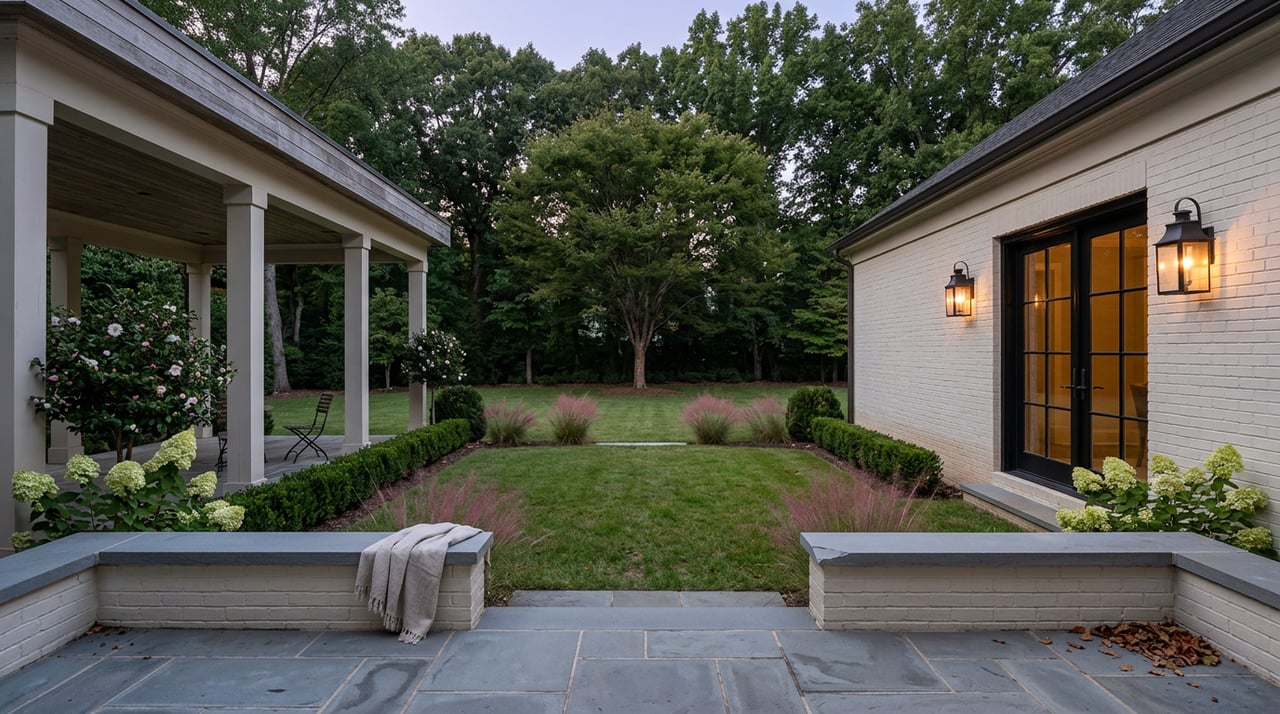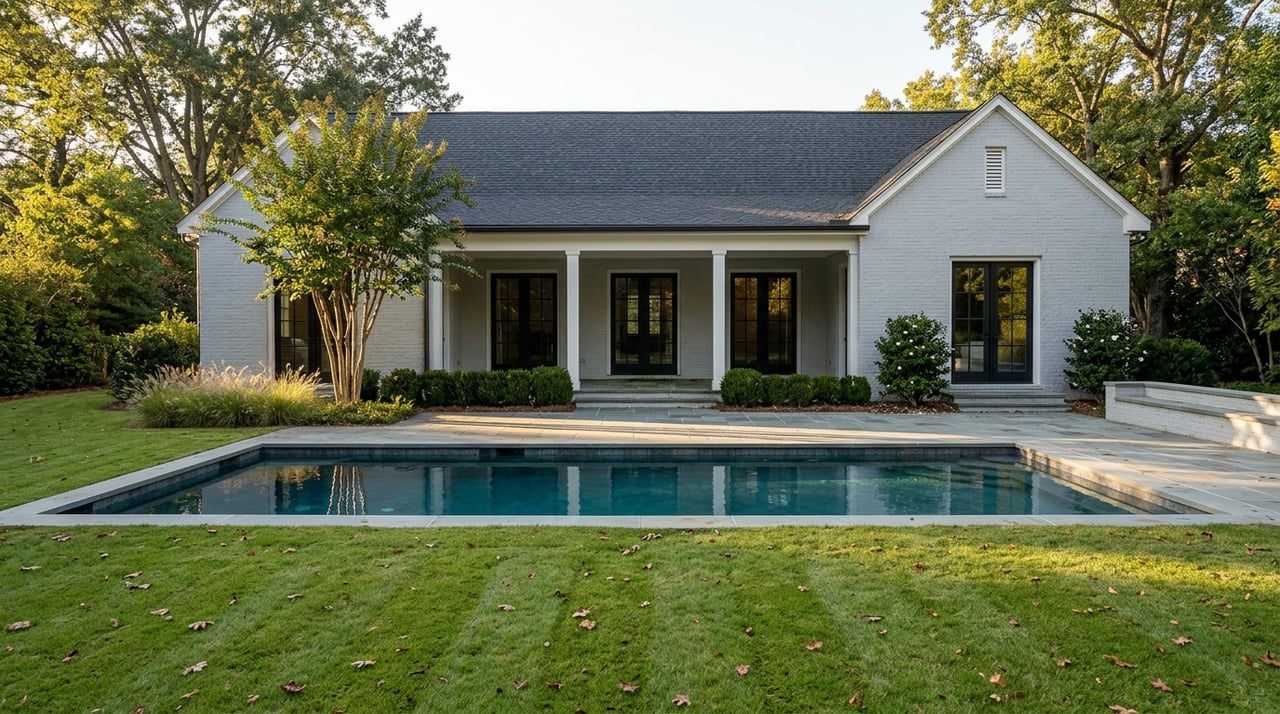
A buyer tours a five-acre Milton parcel on a Saturday, falls for the pasture view, and starts sketching a barn behind the house on the drive home. By Monday, a survey and a call to Community Development have cut the barn footprint in half, moved the pool twenty feet, and raised a question about the septic field the listing agent never mentioned. Nothing about that story is unusual here.
Milton's price per acre reads like a straightforward premium over Alpharetta and Roswell. The math behind it is not. The city's zoning code, its April 2026 amendments, and its Transfer of Development Rights program all quietly reshape what a Milton acre lets you build, sell, and expand. That gap between listed acreage and usable acreage is the single most useful thing a serious buyer can understand before writing an offer.
The Number On The Listing Card Isn't The Number You're Buying
Almost every residential parcel in Milton sits in the AG-1 Agricultural district, which anchors a one-acre minimum lot size and a set of rules written to hold the city's rural, equestrian look in place. The listed acreage is gross land. The buildable envelope is what remains after setbacks, impervious-surface caps, tree protection, floodplain and stream buffers, septic reserve area, and well placement are all subtracted.
That envelope is where you actually get to put a house, a pool, a detached garage, or a stable. On a one-acre parcel with mature canopy, it can be a surprisingly small rectangle. On five acres of gently sloped pasture with a creek along the back line, it can be generous. Two parcels at the same list price and the same acreage can deliver very different buildable outcomes, and the listing photos rarely tell you which is which.
Milton's tree preservation ordinance is among the strictest in North Fulton, which is a feature for owners who want to sit under a canopy and a friction for owners who want to open up a view. Fire coverage adds another wrinkle: the city's minor plat guidance flags dwellings sited more than 600 feet from the road, and structures more than 1,000 feet from a hydrant or approved water supply can be treated as unprotected for insurance purposes unless mitigations are in place. Long drives look romantic on Birmingham Road. They also carry underwriting consequences.
What Changed In April 2026
For most of early 2026, the city was operating under a moratorium on minor subdivision plats in AG-1. On April 13, 2026, the City Council voted unanimously to lift the moratorium on applications for minor subdivision plats of less than 3 acres in AG-1 zoning districts after a months-long code review. The amendments tightened, rather than loosened, what small subdivisions can do.
Three changes matter most to a buyer:
| Rule | What It Does | Why It Matters To A Buyer |
|---|---|---|
| 150-foot minimum lot width at building line | Applies to new AG-1 lots created through minor or final plats, with cul-de-sac lots retaining a 100-foot minimum | Newly platted lots read wider and less compact from the road, protecting the rural viewshed neighbors bought into |
| Agricultural Tract Exception | Encourages preservation of legacy tracts of 10 or more acres by easing how adjacent one-acre lots can be maintained and divided over time | Legacy land keeps its footprint; buyers of adjacent one-acre parcels get a more predictable neighboring landscape |
| Large lot incentive | Allows tracts of 3 acres or larger up to 25 percent impervious surface, regardless of public or private road frontage | A three-acre parcel now supports more house, more hardscape, and more accessory structures than a smaller lot proportionally allows |
The mechanics behind the moratorium are worth understanding. Deputy Community Development Director Tracie Wildes described a pattern of larger homes and more amenities being built on essentially the same-sized lots, with minor plats moving faster up front and more issues commonly identified later during permitting, sometimes after lots have already been sold. Translation: buyers were closing on minor-plat lots and then learning during permitting what they could and could not actually build. The April changes push more of that review earlier in the process, which is friendlier to a buyer who is asking questions before an offer.
Anyone buying newly created land in Milton right now should ask specifically whether the parcel was platted before or after April 13, 2026, and which plat process it moved through. The answer changes what standards apply.
Why Milton Sellers Get The Resale They Ask For
Here is the mechanism most buyers miss. Milton runs a Transfer of Development Rights program that pairs sending sites in AG-1 and the T2 rural zone with receiving sites in the Crabapple and Deerfield form-based-code districts. Landowners in the countryside voluntarily encumber their property with a permanent conservation easement, giving up future development potential in exchange for TDRs that developers can buy to build at higher density inside Crabapple and Deerfield. Rural land stays rural. Village and mixed-use land absorbs the growth.
That trade is why the pasture next to the estate you are touring is likely to still be a pasture in twenty years. It is also why Milton's rural roads have not turned into cul-de-sac subdivisions the way large-lot land has in less protective North Atlanta cities. The city's own conservation easement template describes property "designated in the Plan for the preservation of its Rural Viewshed, that is, its pasture and forests that can be seen from the road," language that gets recorded in Fulton County land records and runs with the land in perpetuity.
For a buyer, this is the resale story hiding behind the price tag. You are not just paying for one acre with a house on it. You are paying for a policy structure that makes it hard for anyone to change the view out your window later. That structure, more than any single home feature, is what supports long-term value in Milton estates.
Read The Market Data Through The Envelope
Milton's headline numbers make more sense once the envelope is in the picture. As of April 2026, Milton's median list price sat at roughly $1.38 million against a statewide Georgia median of $385,000, and Realtor.com data showed Milton inventory up 7.55 percent year over year and 11.33 percent month over month. Redfin's March 2026 read had the median sale at about $1.07 million, down 4.5 percent year over year, with a 34-day median time to sell.
The submarket splits are more useful than the citywide number. Realtor.com's spring 2026 data pointed to a 31-day median in The Manor Golf and Country Club and 36 days in Crooked Creek, both faster than the citywide figure. Well-defined gated and golf communities are moving. Standalone AG-1 acreage with unresolved buildability questions is where days on market stretch. The reason is not mystery. It is the envelope. A buyer of a Manor home is buying a known product with known setbacks and known HOA controls. A buyer of raw AG-1 acreage is buying a due-diligence project.
Layer in Freddie Mac's 30-year fixed-rate mortgage at 6.51% on May 21, 2026, and the picture sharpens further. Rate-sensitive buyers scrutinize what they get for the monthly payment. That scrutiny rewards Milton parcels where the buildable envelope is legible and punishes parcels where it is not.
The single question that separates a great Milton lot from a frustrating one is not "How many acres?" It is "How many of those acres will the city, the health department, and the arborist actually let me use?"
The Diligence Sequence Before You Write An Offer
Order matters here. Doing these in sequence keeps a buyer from falling in love with a parcel that cannot support the plan.
- Pull the parcel's zoning district and any overlay designation from the City of Milton Community Development office. Rural Milton Overlay, Crabapple Form-Based Code, and Deerfield Form-Based Code all impose different standards on top of the base zoning.
- Verify septic and well feasibility with Fulton County Environmental Health, including soil testing and reserve-field siting for any pool or accessory-structure plan.
- Order a current boundary and topographic survey with tree canopy, floodplain, stream buffers, and any recorded easement plotted on it. The Rural Viewshed and TDR easements, if present, will constrain future changes.
- Map fire access. Confirm distance from the nearest hydrant or approved water source, and whether the intended building site sits within 600 feet of the road or requires additional fire-suppression infrastructure.
- Ask when the parcel was last platted. Anything created after the April 2026 amendments will reflect the new width and impervious-surface rules; anything older may be grandfathered under different standards.
None of this is exotic. All of it is worth doing before earnest money is at risk.
Questions Buyers Ask Once They Understand The Mechanics
Can I subdivide a Milton lot I already own? Sometimes, if the new lots meet AG-1 minimum area, the 150-foot width standard at the building line, frontage, access, and septic requirements. Minor and final plat processes have different review timing, and after the April 2026 amendments, more of the buildable-area review happens earlier. Plan for a longer, more thorough process than a typical suburban lot split.
Are horses actually allowed on a one-acre Milton lot? Equestrian uses are permitted in acreage districts under specific standards for lot area per animal, stable setbacks, and manure and odor control. One acre is on the small side for a functional equestrian setup. Two to five acres is a more realistic starting point for anyone who wants a horse at home, and the code specifics should be confirmed with the city for any particular parcel.
How does the TDR program affect me as a homeowner, not a developer? If you buy a rural parcel that has already sold its development rights into the TDR program, a permanent conservation easement runs with the land. You still own it and can use it under AG-1 or T2 standards, but future subdivision or intensification is off the table. That is bad news if you want to split the parcel later and good news if you want the neighboring pasture to stay a pasture.
Is Milton in a buyer's market or a seller's market right now? As of spring 2026, it is neither, uniformly. Sub-$1.5 million homes in established gated and golf communities like The Manor and Crooked Creek continue to move in roughly a month. Raw AG-1 acreage and homes above $2 million tend to sit longer, particularly where buildability is not obvious from the listing. Pricing and presentation carry more weight than they did during the 2021 to 2022 peak.
Milton rewards buyers who read the land, not just the listing. If you are weighing an estate purchase here, a golf-community move-up, or a first look at what an AG-1 acre could support, Matthew Evans can walk the parcel with you, translate the code into a plan, and connect the dots before you write the offer. Let's connect.