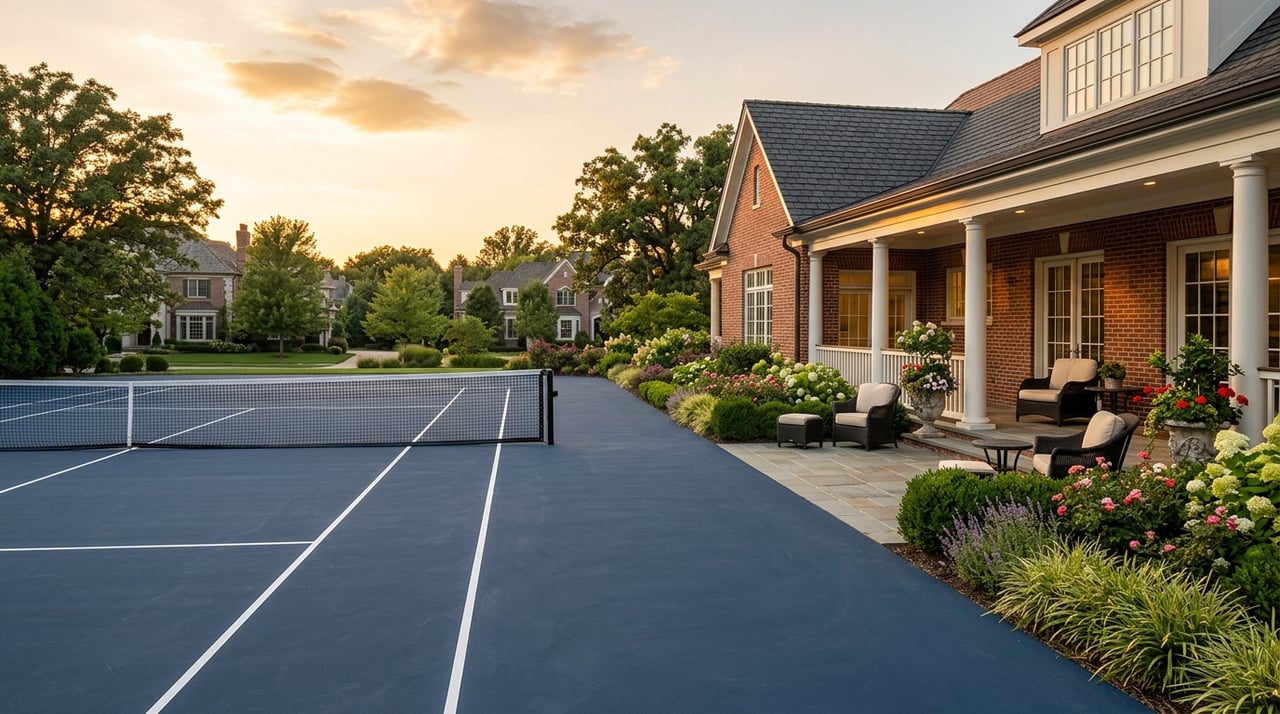
Wondering what people really mean when they talk about Dunwoody’s “swim and tennis” lifestyle? It is about much more than a neighborhood pool or a few courts tucked behind a clubhouse. If you are buying in Dunwoody, understanding how these communities actually function can help you choose a neighborhood that fits your routine, your social style, and your long-term plans. Let’s dive in.
Why swim and tennis matters
In Dunwoody, swim and tennis neighborhoods appeal to buyers who want recreation, social connection, and convenience in one place. The city’s 2025 population estimate is 51,792, and about 24.6% of residents are under 18, which helps explain why communities with structured activities and repeat gathering spaces continue to draw attention.
Dunwoody also has a strong professional base. According to U.S. Census QuickFacts, 72.2% of adults age 25 and older hold a bachelor’s degree or higher, median household income is $121,903, and mean commute time is 24.9 minutes. In a market shaped by busy schedules and access to major job centers, amenity-rich neighborhoods can offer a practical lifestyle advantage.
What the lifestyle looks like
The phrase “swim and tennis neighborhood” can sound simple, but in Dunwoody it often describes a full community rhythm. These neighborhoods tend to revolve around clubs or amenity spaces that host recreation, team activities, and social events throughout the year.
During the summer, the pace often picks up. Many clubs organize youth swim and dive teams, swim meets, cookouts, and poolside gatherings. Tennis tends to stretch beyond summer, with adult and youth team play, scheduled court use, and a more year-round pattern.
What stands out is the consistency of the social touchpoints. Instead of needing to plan every outing across town, you may find that some of your week naturally centers around the neighborhood club, courts, pool deck, or pavilion.
Common Dunwoody club models
Dunwoody does not have just one swim and tennis setup. Buyers will see several different models, and those differences matter when you compare neighborhoods.
Resident-focused clubs
Some clubs are closely tied to nearby subdivisions and are part of the identity of the surrounding neighborhood. The Branches, for example, centers its amenities around a clubhouse, a two-level outdoor pavilion, and swim, dive, and tennis teams on six wooded acres. The club describes itself as a multigenerational community that has connected families since the 1970s.
Dunwoody North Driving Club is another example of a neighborhood-centered setup. It includes a large pool, diving area, four lighted tennis courts, a playground, a clubhouse, youth swim and dive programming, ALTA and USTA teams, and year-round social events.
Membership clubs with broader access
Other clubs may serve a wider portion of Dunwoody instead of only one subdivision. Wynterhall is a neighborhood swim and tennis club with an Olympic-sized pool, two diving boards, four tennis courts, summer kids’ swim and dive teams, ALTA teams for adults and children, and pavilion rental. Membership is open to the broader Dunwoody area, with priority for nearby subdivisions.
This type of setup can create more flexibility for buyers. You may be able to enjoy a swim and tennis lifestyle without living inside one exact neighborhood boundary, but you will still want to confirm how membership priority and waitlists work.
Amenity-rich social clubs
Some clubs lean heavily into both recreation and social programming. Vermack combines a pool, separate kiddie pool, slide, diving board, six lighted tennis courts, two permanently lined pickleball courts, and a social calendar that includes movie nights, cookouts, adult swims, holiday parties, and trivia nights.
That mix can be especially appealing if you want activity options beyond tennis and swimming alone. It also shows how Dunwoody’s club culture can extend into casual gatherings and recurring events that help neighbors connect.
Amenities you may find
Not every neighborhood offers the same package, but several features show up often in Dunwoody’s swim and tennis communities.
Pool features
Pools can vary from lap-style or Junior Olympic layouts to large recreational pools with diving areas. Some communities add extras like separate kiddie pools, adult-only pool spaces, or slides.
Brooke Farm reflects this broader amenity approach. It includes four tennis courts, a Junior Olympic lap pool, an adults-only pool, a community gathering area, and walking and jogging space inside the neighborhood.
Tennis and pickleball access
Tennis remains a major part of the lifestyle in many Dunwoody communities. You may see lighted courts, ALTA teams, USTA teams, and reservation systems that support organized play.
Pickleball is also part of the picture in some locations. Vermack, for instance, includes two permanently lined pickleball courts, which adds another layer of flexibility for residents and members.
Social spaces
Clubhouses, pavilions, playgrounds, and gathering lawns often shape how these neighborhoods feel day to day. Even when you are not using the pool or courts, those shared spaces can support birthday parties, holiday events, cookouts, and low-key meetups.
That matters because the lifestyle is not just about facilities. It is about having a built-in setting for connection and routine.
How Dunwoody supports the lifestyle
Swim and tennis living in Dunwoody does not exist in isolation. It works well in part because the city also offers a strong network of public recreation and growing mixed-use areas.
Parks and green space
The City of Dunwoody says it has more than 200 acres of green space across seven major parks. Those parks include activities and features such as tennis, pickleball, trails, playgrounds, pavilions, a dog park, and a nature center.
For buyers, that creates a nice balance. Even if your neighborhood club is a major part of your routine, public parks add more places to walk, play, and spend time outdoors.
Mixed-use convenience
Dunwoody’s planning focus also helps explain why these neighborhoods remain attractive. Perimeter Center, Dunwoody Village, High Street, and other mixed-use areas connect residents to shopping, dining, offices, and transit.
The city notes that High Street is being developed as a mixed-use destination near GA-400, I-285, and the Dunwoody MARTA station. Other projects, including Village Crossing and the Perimeter Center East Path, are aimed at improving sidewalks, cycle tracks, and pedestrian connections. That broader convenience can complement neighborhood living in a meaningful way.
What buyers should verify first
This is where a lot of homebuyers can make wrong assumptions. Just because a home is in or near a swim and tennis neighborhood does not always mean access works the way you expect.
Ask who controls access
In some Dunwoody communities, the HOA and the club are separate. Village Mill is a useful example because the neighborhood association explicitly separates pool membership from neighborhood association dues.
That means you should confirm:
- Whether club access is included with ownership
- Whether dues are separate from HOA payments
- Whether membership is optional or required
- Whether nonresidents can join
- Whether nearby residents receive priority
Ask about peak-time use
Organized teams and reservations can shape how often amenities are available for casual use. Swim meets, dive practice, tennis leagues, and scheduled events may affect access during busy times.
That is not necessarily a drawback, but it is important context. If you picture quiet, flexible use every afternoon, you will want to compare that expectation against the actual calendar and reservation system.
Ask about the social fit
Some buyers want an active calendar and frequent neighborhood events. Others prefer access to amenities without a packed social schedule.
Neither preference is better. The key is finding a community whose pace feels comfortable for you.
Why lifestyle fit matters in Dunwoody
When buyers compare homes, it is easy to focus on square footage, finishes, and lot size. In Dunwoody, the neighborhood structure around the home can matter just as much.
A swim and tennis setting may support your routine in ways that are hard to measure on a listing sheet. It can simplify after-work recreation, create recurring weekend plans, and give you easy access to outdoor amenities close to home.
For some households, that lifestyle becomes one of the biggest reasons to choose one part of Dunwoody over another. It is less about checking an amenity box and more about how you want daily life to feel.
If you are weighing Dunwoody neighborhoods, a clear look at club structure, amenity access, and community rhythm can help you make a more confident decision. And if you want guidance that goes beyond the home itself, Matthew Evans can help you compare not just properties, but the lifestyle each neighborhood offers.
FAQs
What is a swim and tennis neighborhood in Dunwoody?
- In Dunwoody, a swim and tennis neighborhood usually refers to a community or club-centered area with pool and court amenities, along with social events, team activities, and shared gathering spaces.
Are Dunwoody swim and tennis clubs always included with homeownership?
- No. Local examples show different structures, including resident-centered clubs, broader membership clubs, and neighborhoods where pool membership is separate from HOA dues.
What amenities are common in Dunwoody swim and tennis communities?
- Common amenities include pools, diving areas, tennis courts, clubhouses, pavilions, playgrounds, and in some cases pickleball courts, walking space, and organized social programming.
Do Dunwoody swim and tennis neighborhoods offer activities year-round?
- Many do. Summer often brings swim and dive teams and pool events, while tennis programming, leagues, and social gatherings may continue throughout the year.
What should buyers ask before choosing a Dunwoody swim and tennis neighborhood?
- You should ask whether access is included or separate, who can join, whether residents receive priority, and how team schedules or reservation systems affect casual use.